Why Do Cats Knead? 7 Surprising Reasons (2026)
Why do cats knead? Discover 7 surprising reasons behind your cat's 'biscuit-making' habit — from nursing instincts and stress relief to scent marking, stretching, and affection. Science-backed.
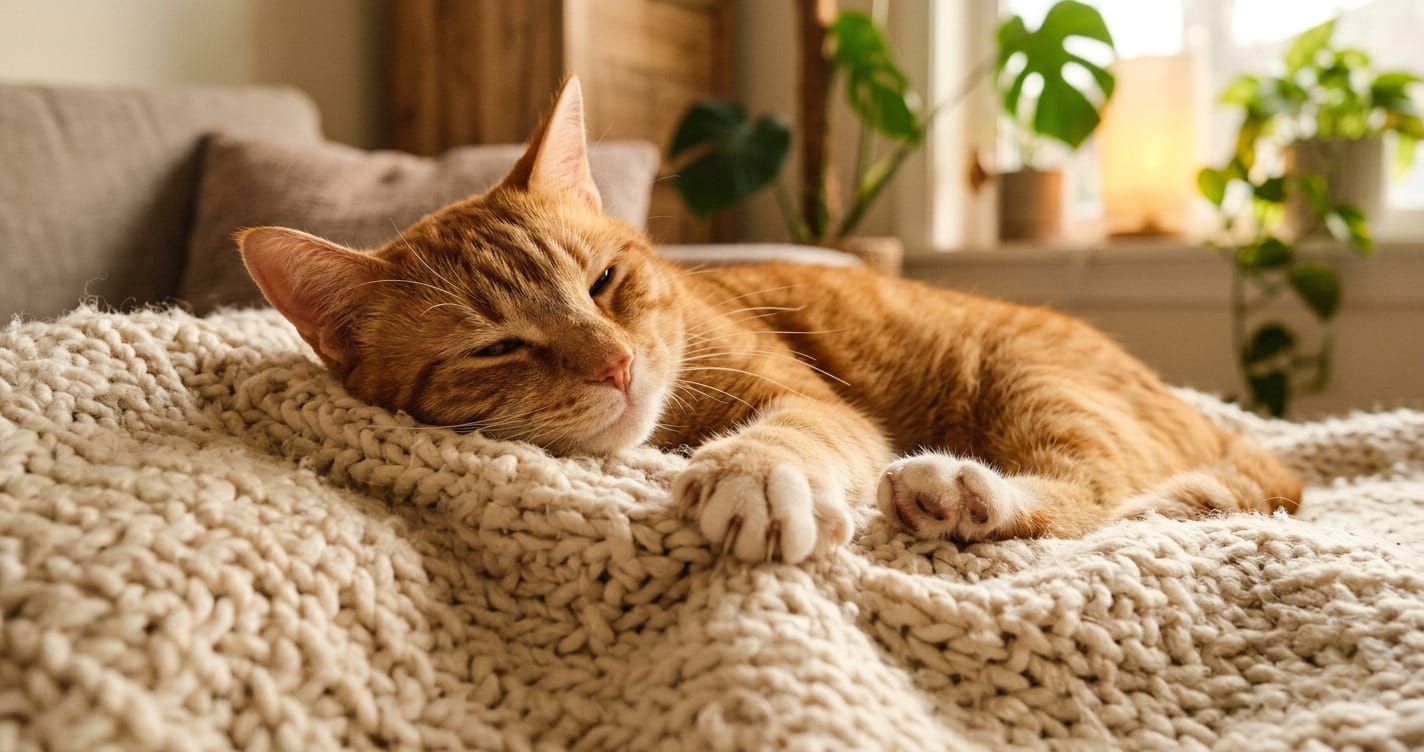
Your cat hops onto your lap, settles in, and starts rhythmically pushing their paws into your legs. Left, right, left, right—sometimes with claws, sometimes without. Cat people call it "making biscuits," and if you've ever been on the receiving end, you know it's equal parts adorable and slightly painful. But why do cats knead in the first place?
Turns out, this isn't random fidgeting. Kneading is deeply wired into your cat's biology, and the reasons behind it go back to the very first days of their life. Understanding kneading is part of understanding how cats perceive their environment—through touch, scent, and instinct.
1. It Starts as a Nursing Instinct
Kittens knead their mother's belly while nursing. The rhythmic pushing stimulates milk flow, helping them feed more effectively. It's one of the first coordinated movements a kitten learns—before they can even see properly, they already know how to knead.
Most cats outgrow the need to nurse, but the motion itself sticks around. Behaviorists call this a "neonatal behavior" that carries into adulthood. When your adult cat kneads your lap, they're essentially replaying a comfort loop from kittenhood. It's not that they think you're their mother—it's that the action itself triggers the same feeling of warmth and safety they felt while nursing.
You might notice your cat purring, half-closing their eyes, or even drooling slightly while kneading. That's the full comfort package kicking in. They're genuinely blissed out.
2. Kneading as a Way to Manage Stress
Kneading isn't only about happy memories. It's also a self-soothing mechanism. The repetitive motion releases endorphins—the same feel-good chemicals that make exercise or stretching satisfying for humans. For a cat dealing with a new environment, loud noises, or changes in routine, kneading works like a built-in stress valve.
Shelter cats and cats in multi-pet households often knead more frequently, which supports this theory. It's not a sign of anxiety on its own—it's more like your cat's version of taking a deep breath. If your cat kneads a blanket before settling down for a nap, they're literally calming themselves to sleep.
This is similar to why cats love boxes—both behaviors are rooted in the same instinct to create a sense of security and control over their environment.
3. Scent Marking: "This Is Mine"
Here's something most people don't realize: cats have scent glands in their paw pads. When your cat kneads your favorite blanket—or you—they're depositing pheromones that are invisible and odorless to humans but carry a clear message to other cats: "claimed."
This territorial marking is subtle but meaningful. Your cat isn't just getting comfortable on your lap. They're marking you as part of their territory. In multi-cat households, you might notice different cats kneading the same spots—it's an ongoing, silent conversation about ownership and shared space.
It's actually a compliment. Your cat is saying you belong to them.
4. The Nesting Theory: Preparing the Ground
Wild cats don't have memory foam beds. Before lying down, they pat down grass, leaves, and soft ground to create a comfortable sleeping spot. This nesting behavior serves two purposes: it softens the surface and checks for hidden threats like insects or sharp objects underneath.
Domestic cats have inherited this instinct even though your couch cushion poses zero threat. Watch closely the next time your cat kneads a blanket before curling up—there's often a specific sequence. Knead, circle, knead again, then settle. It's a pre-sleep ritual that hasn't changed much since their wild ancestors did the same thing on the African savanna.
Female cats sometimes knead more intensely before giving birth, actually building a nest for their kittens. So the behavior has real, functional roots—it just happens to look cute when your spayed tabby does it on your duvet. The same paw coordination shows up when cats knock things off tables—another instinct-driven paw behavior.
See the world through your cat's eyes — try CatLens free
Point your camera and instantly switch between human and feline vision.
5. Showing Trust and Affection
Not every cat kneads every person. If your cat kneads you specifically, take it as a genuine compliment. Cats reserve this behavior for the humans and surfaces they feel safest with. Kneading on your lap or chest means they've classified you as a source of comfort—someone they can fully let their guard down around.
Behaviorists note that kneading often comes paired with other trust signals: purring, a relaxed tail, half-closed eyes, and the slow blink. The slow blink is essentially a cat kiss—when it appears alongside kneading, your cat is telling you they feel completely safe. It's one of the highest compliments in feline body language.
Cats who were socialized with humans early in life tend to knead their owners more frequently. This doesn't mean a non-kneading cat doesn't love you—some cats simply express affection differently—but if yours does knead, the message is clear.
6. Stretching Muscles and Maintaining Flexibility
Kneading is also a form of exercise. The alternating push-pull motion engages the muscles in your cat's toes, paws, legs, and shoulders. After a long nap, you'll often see cats knead before fully stretching out—it's their way of warming up stiff joints and maintaining flexibility in their extremities.
This is especially important for indoor cats who may not get as much physical activity as their outdoor counterparts. The repetitive motion keeps the tendons in their paws supple and the muscles toned. Think of it as your cat's version of morning yoga—functional, instinctive, and done entirely on their own schedule.
7. When Kneading Tells You Something More
Most of the time, kneading is perfectly normal and healthy. But there are a few things worth paying attention to:
- Sudden increase in kneading: If your cat starts kneading significantly more than usual, it could signal stress from an environmental change. New pet? Construction nearby? Moved the furniture? Cats notice everything.
- Kneading with suckling: Some cats knead while sucking on fabric. This is more common in cats weaned too early and is generally harmless, though it can damage clothes and blankets.
- Painful kneading: If the claws are an issue, keep them trimmed. Never punish a cat for kneading—it's an involuntary comfort behavior. Place a thick blanket on your lap as a buffer instead.
- Kneading one specific area obsessively: Rarely, excessive kneading focused on one body part could indicate discomfort. If your cat seems fixated rather than relaxed, a vet check is a good idea.
See Your Cat's World Through Their Eyes
Kneading is just one piece of the puzzle when it comes to understanding your cat. So much of their behavior connects back to how they perceive their environment—what they see, what they sense, and what makes them feel safe. CatLens lets you see what your cat sees, from their unique color vision to their wide-angle field of view.
The more you understand their perspective, the better you can respond to what they're telling you—whether that's through a slow blink, a cardboard box obsession, or a lap full of biscuits.
Frequently Asked Questions About Cat Kneading
Why does my cat knead me?
Cats knead the people they feel safest with. It combines nursing instinct from kittenhood, scent marking from paw glands, and a self-soothing response that releases endorphins. If your cat kneads you while purring, it is one of the strongest signs of trust and affection a cat can show.
Why does my cat knead with claws out?
Kittens knead their mother with claws extended to stimulate milk flow while nursing. Many adult cats retain this habit. It is not intentional — the claw extension is part of the same reflex. You can manage it by keeping your cat's claws trimmed or placing a thick blanket on your lap.
Is cat kneading a sign of love?
Yes. When combined with purring, slow blinking, and a relaxed posture, kneading is one of the clearest indicators that your cat feels safe and bonded with you. Cats typically only knead people and surfaces they associate with comfort and security.
Why does my cat knead before sleeping?
This traces back to wild cat ancestors who would pat down grass, leaves, and soft ground to create a comfortable, safe sleeping spot. Domestic cats have inherited this nesting instinct. The knead-circle-settle sequence is a pre-sleep ritual that has not changed much over thousands of years of feline evolution.
Related Articles
Your cat has expensive toys but chooses a cardboard box instead. Here's the surprising science behind why cats are obsessed with boxes and how their unique vision plays a role.
Read MoreThe slow blink is how cats say 'I love you.' Learn the science behind this behavior and how to slow blink back at your cat.
Read MoreYour cat isn't seeing ghosts. Science reveals 7 reasons cats stare at empty spaces — from ultrasonic hearing to UV light detection.
Read More