Can Cats Really Predict Earthquakes? Surprising Science Explained
Scientists studied whether cats sense earthquakes before they happen. The evidence is more compelling than you'd expect.
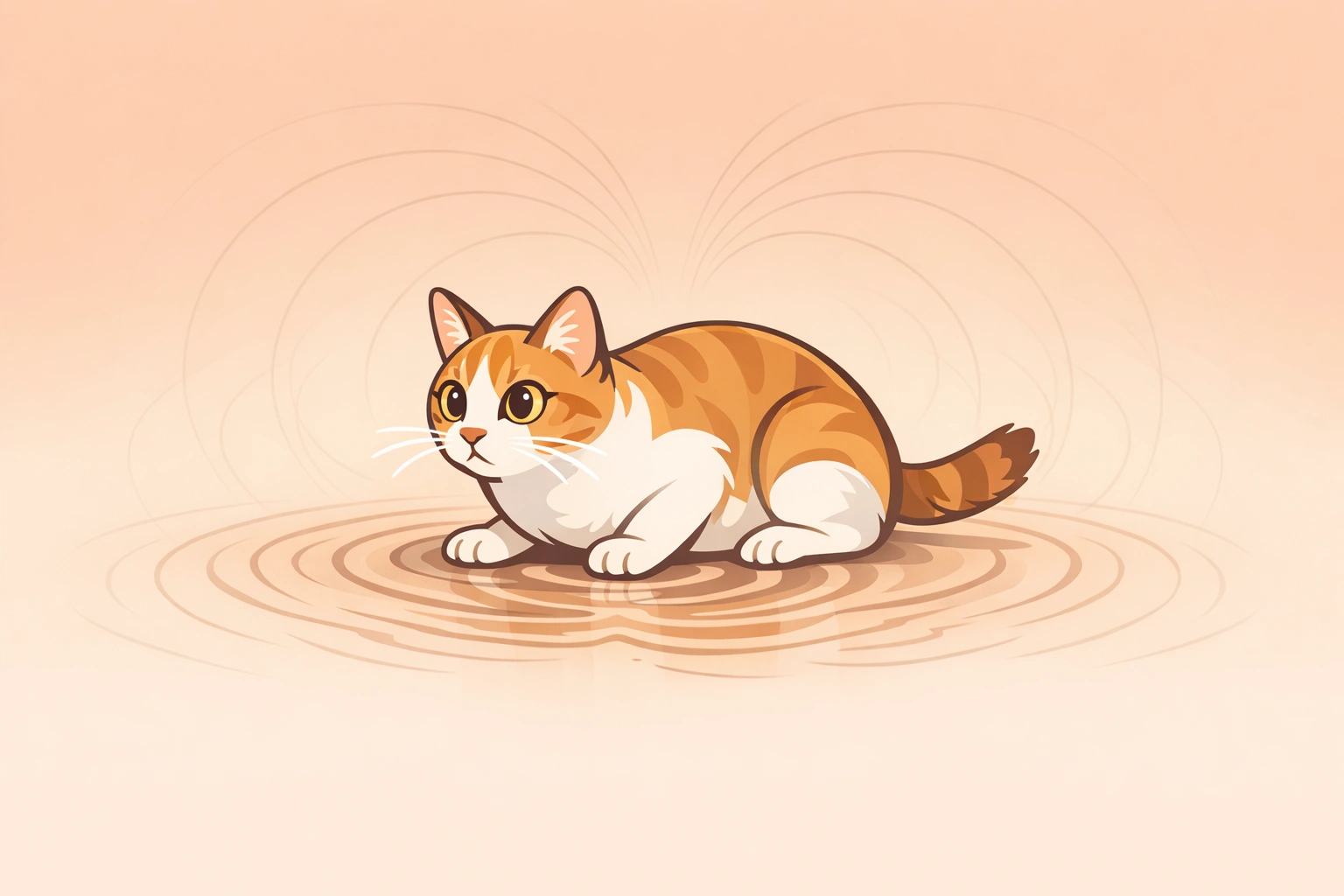
Your cat bolts from the couch five minutes before an earthquake hits. Urban legend? Maybe not. Emerging research suggests cats possess sensory abilities far beyond their famous night vision—including a possible sensitivity to Earth's magnetic field.
The Earthquake Connection: What We Know
Reports of cats acting strangely before seismic events go back centuries. In 1975, mass animal evacuation reportedly preceded the Haicheng earthquake in China. More recently, a 2018 study published in the Bulletin of the Seismological Society of America tracked animal behavior near active fault lines in Italy. Cats showed measurably increased restlessness hours before tremors—far beyond what chance would predict.
But detecting an earthquake isn't the same as predicting one. Cats likely pick up on precursor signals humans miss entirely: subtle vibrations called P-waves, shifts in static electricity, or changes in ground-level gas emissions that occur before the main shaking starts. A 2020 study in Ethology reinforced this, documenting unusual feline behavior—excessive grooming, hiding, and increased vocalization—in the 24 hours preceding seismic events.
Their paws play a role too. Cat paw pads contain dense clusters of mechanoreceptors that detect micro-vibrations through surfaces. The same sensitivity that drives them to knock objects off tables lets them feel what we can't.
Magnetic Field Perception: The Emerging Science
Beyond earthquake detection, there's a stranger claim gaining scientific ground: cats may sense Earth's magnetic field. A 2024 study in the Journal of Comparative Physiology found that domestic cats appear to possess magnetoreception—the ability to detect magnetic field direction and intensity. Researchers observed cats consistently orienting along a north-south axis when settling to sleep, a pattern too consistent to be random.
This could explain how lost cats navigate home across hundreds of miles. A 2022 GPS tracking analysis found displaced cats initially oriented toward home regardless of landmarks or scent trails. Something else was guiding them. The phenomenon isn't unique to domestic cats either. Big cats in wildlife reserves and feral colonies show similar orientation patterns, suggesting the trait runs deep in feline biology.
The leading theory involves cryptochrome proteins in the retina. These light-sensitive molecules, also found in bird eyes, react to magnetic fields. Cats may literally see magnetic orientation as a faint visual overlay on their normal perception of the world.
What Your Cat's "Sixth Sense" Really Is
Strip away the supernatural framing and cat "sixth sense" becomes something more interesting: a stack of biological sensors working in concert. Ultra-sensitive hearing that detects frequencies beyond human range. Paws that register vibrations through solid surfaces. Eyes that may process magnetic information alongside visible light. This isn't science fiction. It's sensory integration—multiple detection systems feeding your cat a richer picture of their environment than you'll ever experience.
Your cat isn't psychic. They're equipped with better hardware.
What This Means for You
Pay attention when your cat acts unusual without obvious cause—hiding suddenly, vocalizing oddly, or refusing to settle. They may be processing environmental data you're not receiving. It won't replace a seismometer, but millions of years of evolution built a remarkably sensitive detection system. And it's probably sitting on your lap right now.